
Florida Residential Fence Laws Every Homeowner Must Know
Know Florida Residential Fence Laws before installing a fence. Learn property line, permit, height, setback, and HOA rules Florida homeowners need.
Upgrading your property with a new fence can enhance privacy fence and safety in your personal space. However, it is important to get familiar with Florida residential fence laws.
While the state follows baseline building codes, it is important to know that the rules associated with fences and residential properties are deeply tied to municipal codes and county ordinances.
Neglecting to understand the law can lead to costly fines, neighbour disputes, or even being forced to tear down the fence altogether.
This is why it is important to hire professional contractors like Florida Cracker Services LLC to ensure your fence checks every box for legal compliance.
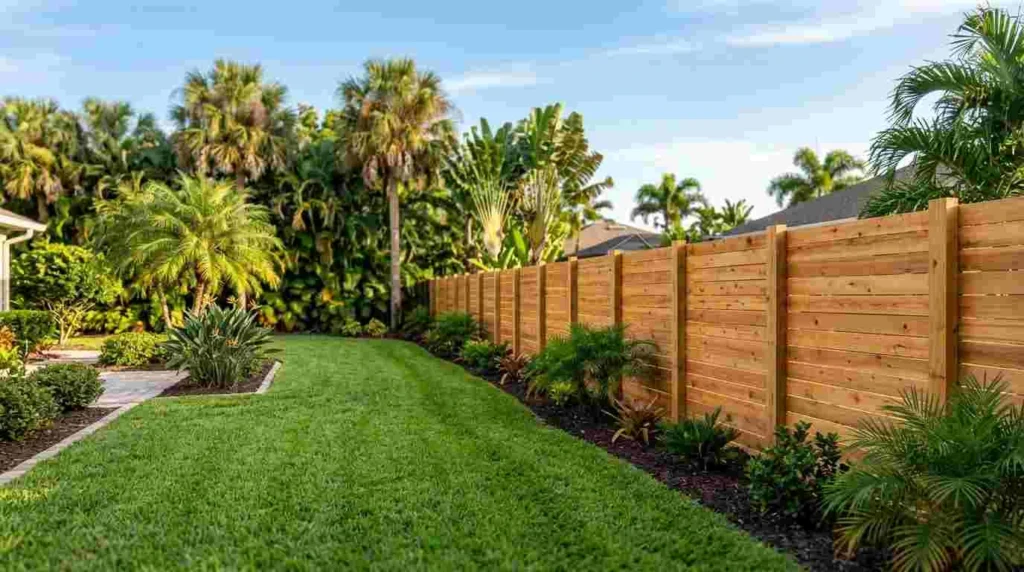
In this guide, we will explain all that you need to know about residential fence regulations in Florida. From Height restrictions and permits to avoiding boundary disputes – we’ve got you covered.
Florida Fence Height Laws: Why Height Matters
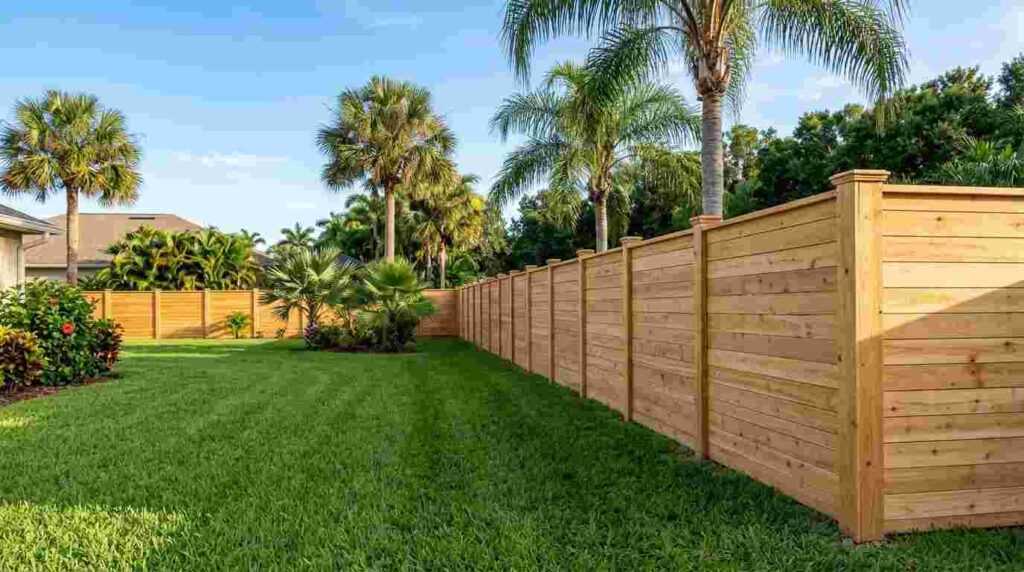
Florida follows strict fence height regulations to ensure privacy, driver safety, and neighborhood aesthetics.
The standard fence height limit across the state is up to 6 feet for the backyard and 4 feet for the front yard. However, your specific residential zoning plays a major role in what you can actually build:
- Corner Lots and Sight Triangles: If your home sits on a corner, zoning regulations get a lot stricter. Front and side fence heights are often capped at 3 or 4 feet to make sure drivers can actually see around the intersection.
- Approved Materials: Local zoning laws also dictate what your fence can be made of.
While timeless choices like wood, vinyl, aluminum, and chain-link are widely accepted, you can’t just put up whatever you want—materials like barbed wire or electric fencing are strictly off-limits in residential areas.
Property Lines, Survey Markers, & Avoiding Boundary Disputes
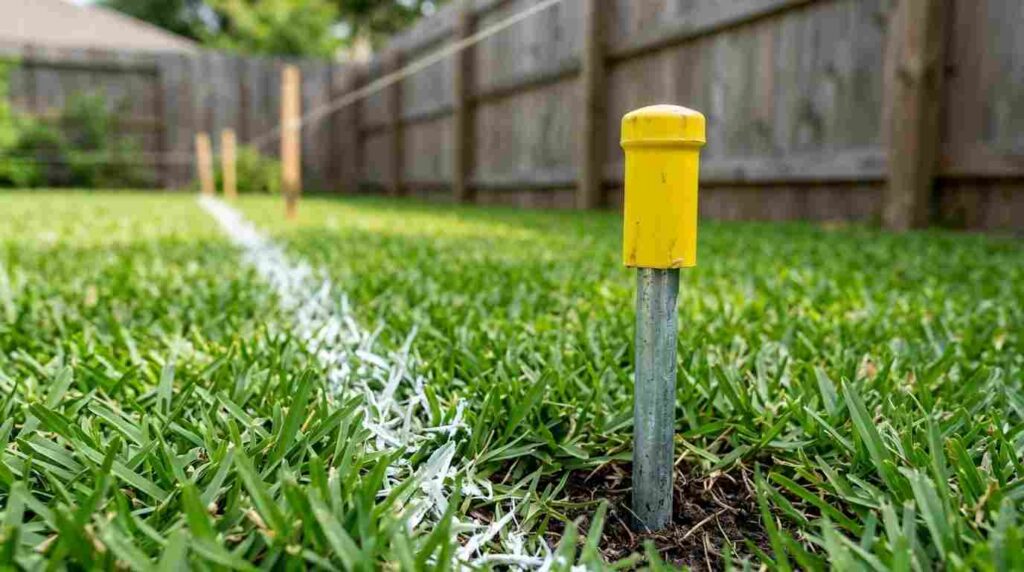
One of the biggest pitfalls of a DIY fence project is accidentally building on your neighbor’s land. Florida property line fence laws make it clear: your structure must sit entirely within your legal boundaries.
The Golden Rule: Never guess where your property ends. Relying on an old map or a visual estimate is a fast track to awkward boundary disputes with the people next door.
To protect your investment and keep the peace, you need to meet a few strict survey requirements:
- Locate Survey Markers: A licensed surveyor needs to find or place physical survey markers to establish your exact boundary lines.
- Calculate Setback Distance: Depending on your local municipal code, your fence may need to meet a specific setback requirement.
This means it has to sit a certain number of inches or feet inside your property line, rather than directly on it.
Watch Out for Utility Easements
Before you or a crew starts digging, you have to account for utility easements. An easement is a legal agreement that gives utility companies or the city the right to access a piece of your land for pipes, power lines, or maintenance.
If you build a fence over an active easement, you run into serious easement restrictions. If a utility crew needs to get to buried lines beneath your yard, they have the legal right to tear your fence down—and they aren’t obligated to pay a dime to fix it.
Navigating the Approval Process: Permits & HOA Gatekeepers
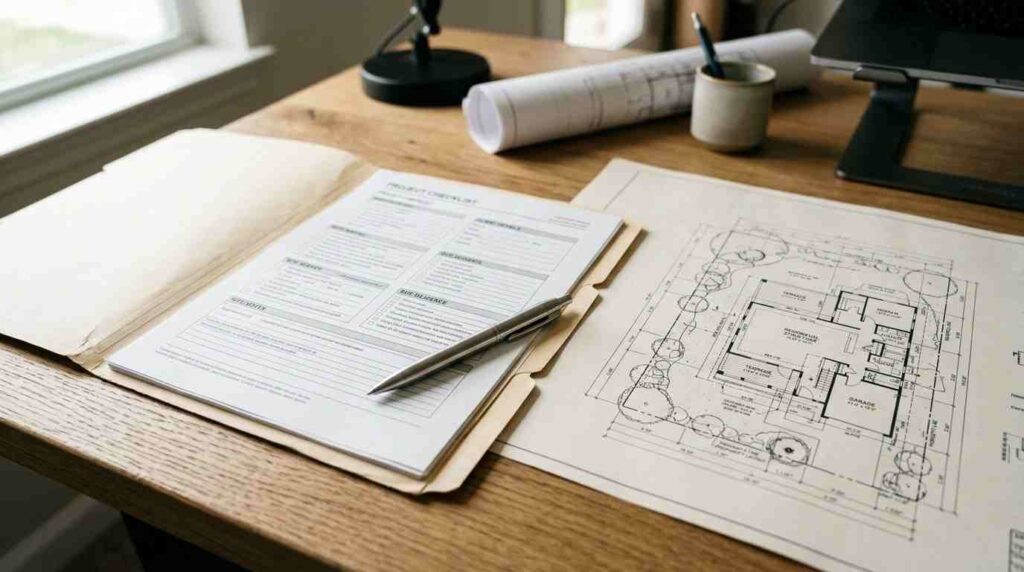
Getting a fence up means dealing with two distinct layers of rules: local government and your neighborhood association.
Florida Fence Permit Requirements
Do you actually need a fence permit in Florida? In almost every county and city, the answer is a definitive yes. The paperwork and approval process typically involves:
- Submitting a recent property survey showing exactly where the fence will sit.
- Filing a Notice of Commencement (depending on the total cost of the project).
- Proving the fence design can handle Florida’s intense wind-load building requirements during storm season.
Florida HOA Fence Rules
Even if your local county ordinances give you the green light, your Homeowners Association (HOA) can completely veto the project.
HOAs are notorious for enforcing strict design restrictions and subdivision restrictions. They frequently limit your choice of colors, materials, and styles to keep the neighborhood looking uniform.
Skipping HOA approval can result in heavy daily fines or a legal headache you just don’t want to deal with.
The Florida Residential Swimming Pool Safety Act
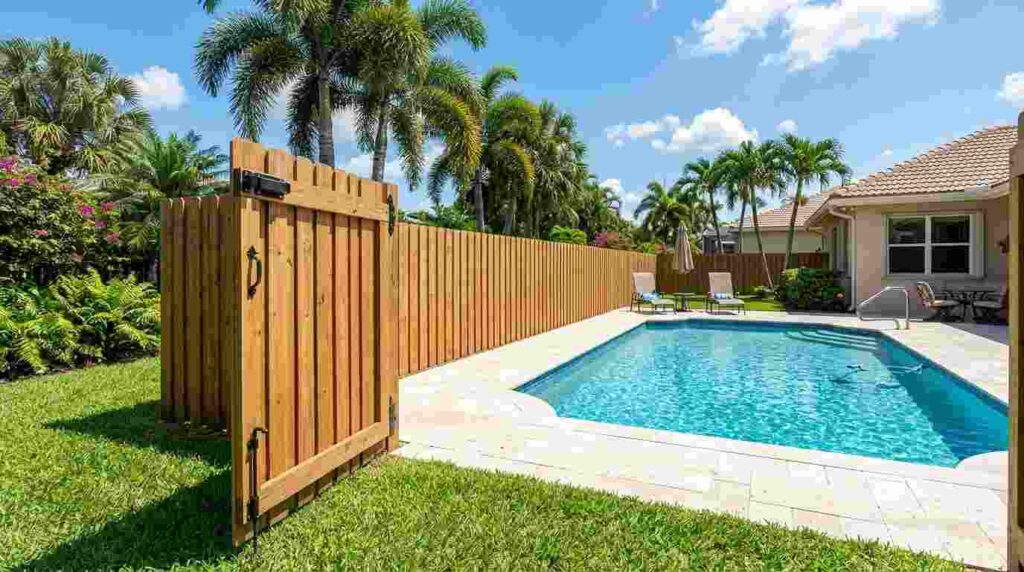
If your new fence is meant to enclose a backyard pool, standard residential rules take a backseat to life-saving state laws.
Under the Florida Residential Swimming Pool Safety Act (Florida Statute Chapter 515), a pool barrier isn’t just a good idea—it is a strict legal mandate.
To meet the state’s legal fence requirements for a pool, your barrier must:
- Be at least 4 feet tall on the outside.
- Have no gaps, slats, or clearances large enough for a small child to crawl through or under.
- Feature gates that open outward (away from the pool) and are completely self-closing and self-latching.
FAQs – Florida Residential Fence Laws
What are residential fence laws in Florida?
They are a mix of state building codes (like pool safety mandates) and local municipal codes that dictate exactly where, how high, and with what materials you can build on your property.
How tall can a residential fence be in Florida?
Generally, the legal fence height maxes out at 6 feet for back and side yards, and 4 feet for front yards. Corner lots usually have lower limits to keep intersections safe for drivers.
Can I build a fence on my property line?
It depends entirely on your local fence code in Florida. Some cities allow shared boundary fences if both neighbors sign off on it, while others require a specific setback distance inside your own property line.
What happens if my fence violates local code?
You could face code enforcement fines, retroactive permit penalties, and a legal order to alter or completely remove the fence at your own expense.
Get a Code-Compliant Fence Estimate Today
Don’t let a simple boundary oversight or a skipped permit turn into an expensive mistake. Building a beautiful, durable fence that actually lasts requires real local expertise.
How do I get a code-compliant fence estimate?
Let the professionals handle the red tape. Contact Florida Cracker Services LLC today to schedule an on-site consultation.
We’ll make sure your new fence respects your property lines, satisfies local codes, and stands strong for years to come.