
As a fencing team that has installed and repaired agricultural and rural fencing across Florida for years, we know a barbed wire fence is one of the most trusted, cost-effective ways to secure large properties, contain livestock, and mark rural boundaries. If you’re a farmer, rancher, or rural property owner trying to decide whether barbed wire fencing is right for your land, this guide walks through everything you need to know — how it works, where it performs best, how it compares to other fencing options, and how to keep it in good condition for decades.
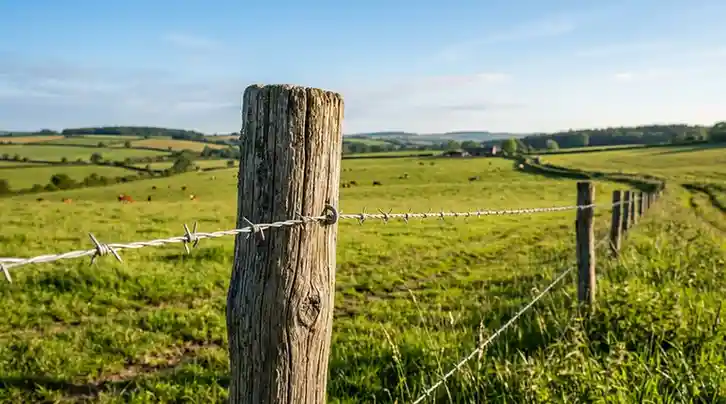
Learn Barbed Wire Fence uses, benefits, safety, and maintenance with expert tips from Florida Cracker Services LLC for durable fencing.
What Is a Barbed Wire Fence?
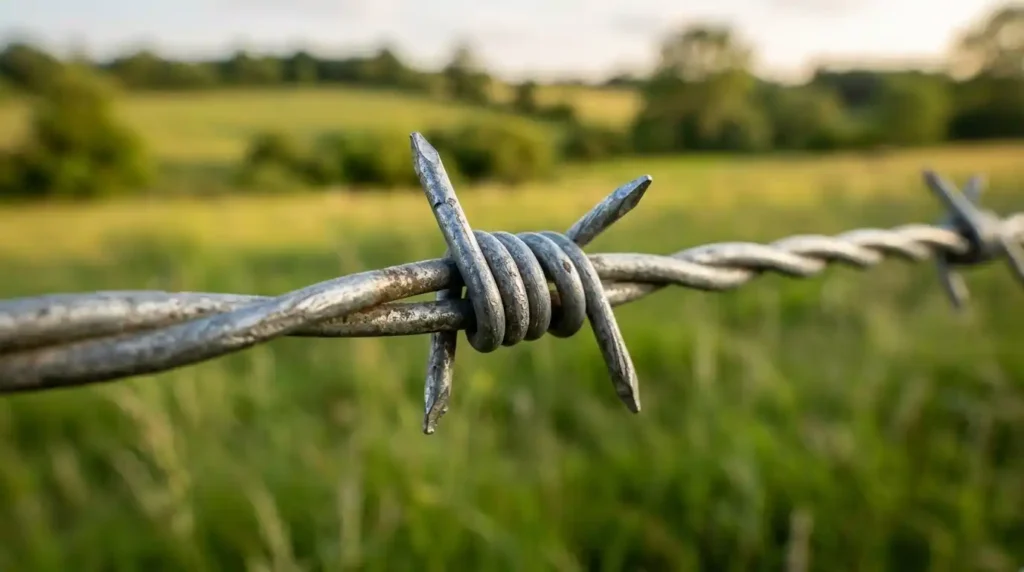
A barbed wire fence is an agricultural fencing system made of twisted steel wire strands fitted with sharp barbs at regular intervals, strung between fence posts to create a durable, low-cost perimeter barrier.
How Barbed Wire Fencing Works
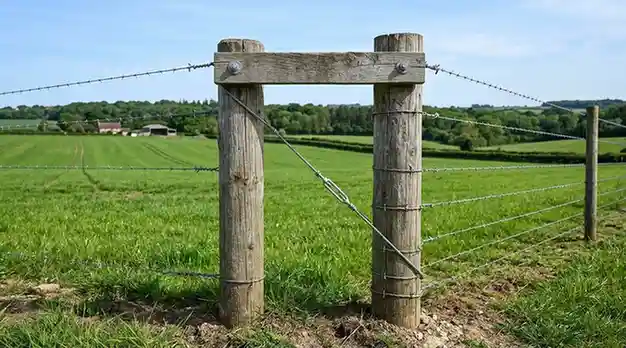
Barbed wire fencing relies on wire tension and the deterrent effect of its barbs. Strands are stretched tightly between steel or wooden fence posts, with corner braces anchoring the line to keep tension consistent. The barbs discourage animals and people from pushing through or climbing over the fence, making it effective for both containment and boundary marking.
Common Applications
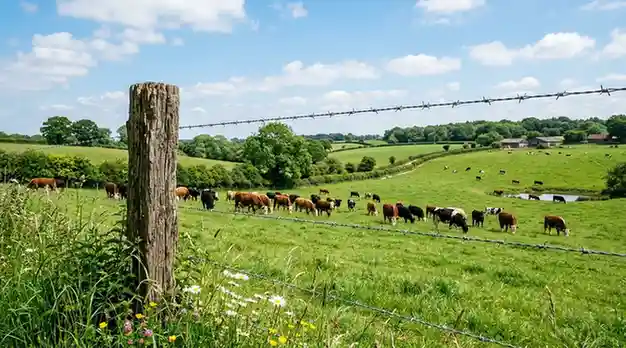
Barbed wire fencing is most commonly used for livestock containment, farm and ranch boundary marking, and large-acreage perimeter security where cost-effective coverage over long distances matters more than aesthetics.
Where Are Barbed Wire Fences Commonly Used?
Farms
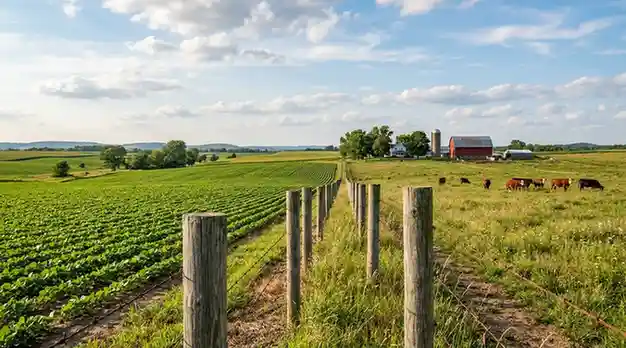
Farm fencing built with barbed wire helps define property lines and keep livestock contained across large planted or grazing areas.
Ranches

Ranch fencing is one of the most common applications for barbed wire, particularly for cattle containment across expansive pastureland.
Large Rural Properties
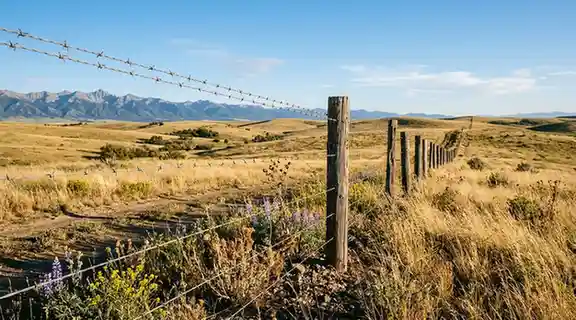
Rural property owners often choose barbed wire fencing to mark boundaries across acreage where a solid fence would be cost-prohibitive.
Commercial Land
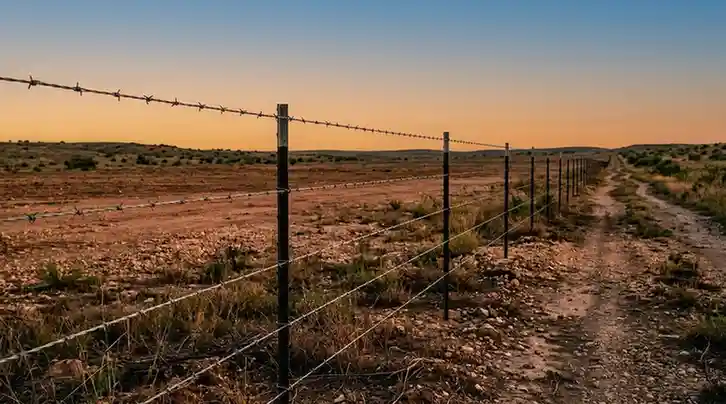
Commercial and agricultural land developers sometimes use barbed wire as an affordable perimeter security option for undeveloped or lightly used land.
Benefits of Barbed Wire Fencing
Is Barbed Wire Fencing Cost-Effective?
Yes — barbed wire remains one of the most affordable fencing options per linear foot, making it practical for covering large rural properties without a large material investment.
How Long Does Barbed Wire Fencing Last?
A well-maintained barbed wire fence can last 20 years or more, particularly when galvanized wire and quality posts are used.
Does Barbed Wire Fencing Require a Lot of Maintenance?
No. Compared to wood or vinyl fencing, barbed wire fencing generally requires only periodic tension checks, post inspections, and rust monitoring rather than ongoing sealing or repainting.
Can Barbed Wire Fencing Cover Large Properties?
Yes. Its low material cost per foot makes barbed wire one of the most practical solutions for fencing large-acreage farms and ranches efficiently.
Types of Barbed Wire Fences
Standard Barbed Wire
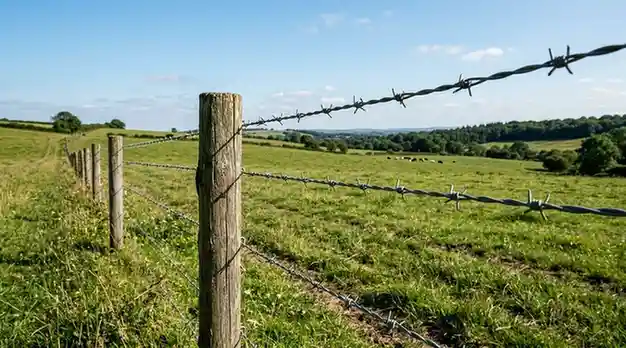
Standard barbed wire fencing uses conventional twisted steel strands and is the most widely used option for general livestock containment.
High Tensile Barbed Wire
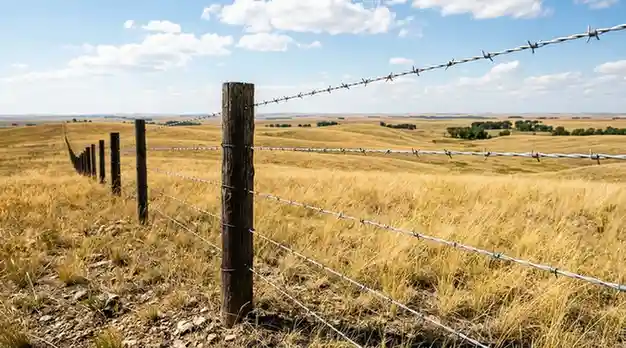
High tensile wire is manufactured to hold tighter tension over longer spans, reducing the number of posts needed and improving durability under stress.
Galvanized Barbed Wire
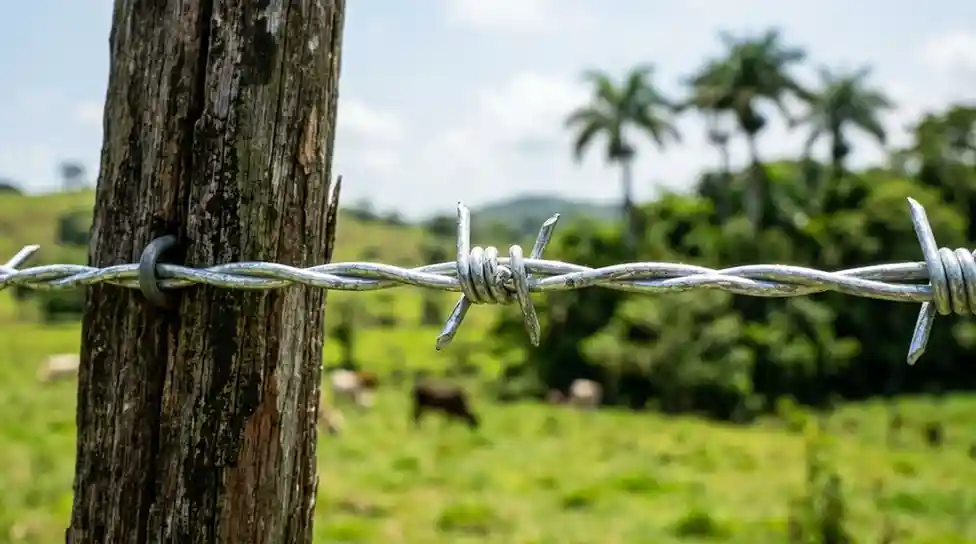
Galvanized barbed wire is coated with zinc for added corrosion resistance, making it a strong choice for humid or coastal climates like Florida.
PVC-Coated Wire
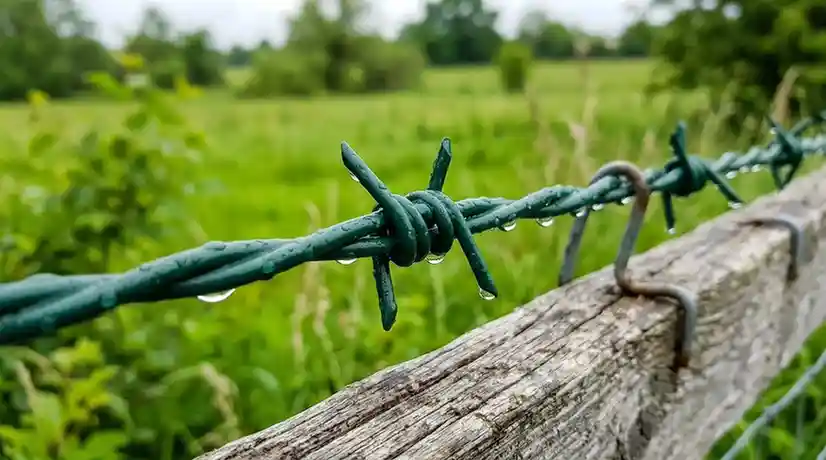
PVC-coated barbed wire adds a protective outer layer that further improves weather resistance and can extend the wire’s usable lifespan in wet conditions.
Barbed Wire Fence vs Other Fence Types
Choosing the right agricultural fencing option often comes down to a direct comparison of cost, containment strength, and maintenance needs.
| Comparison | Barbed Wire Fence | Alternative |
|---|---|---|
| Barbed Wire vs Chain Link | Lower cost per foot, better for large open acreage | Chain link offers more visual solidity but costs significantly more over long distances |
| Barbed Wire vs Wood | More affordable, less maintenance, no sealing required | Wood offers a more finished look but requires ongoing upkeep and is prone to rot |
| Barbed Wire vs Woven Wire | Lower material cost, effective for cattle | Woven wire fence offers better containment for smaller livestock like sheep and goats |
| Barbed Wire vs Electric Fence | No power source needed, permanent barrier | Electric fencing offers flexible, movable containment but requires ongoing power |
How Long Does a Barbed Wire Fence Last?
As noted above, a properly installed barbed wire fence commonly lasts two decades or more. Lifespan depends heavily on wire quality (standard vs. galvanized vs. PVC-coated), post material, and how consistently the fence line is inspected and maintained over time.
Barbed Wire Fence Maintenance Tips
Keeping a barbed wire fence in good working condition doesn’t require much time, but consistency matters:
- Check wire tension periodically, since strands can loosen over time and reduce containment effectiveness
- Inspect posts annually for rot (wood posts) or rust (steel posts), replacing any that are compromised
- Control vegetation along the fence line to reduce moisture buildup and prevent added stress on the wire
- Watch for rust on standard wire, and consider galvanized or PVC-coated wire in humid climates for better long-term corrosion resistance
- Repair breaks promptly to maintain consistent containment and prevent gaps that livestock could exploit
Barbed Wire Fence Safety Considerations
Barbed wire fence safety is an important consideration for any property owner. The wire’s barbs are intentionally sharp, so proper post spacing, wire height, and visible marking near walkways or shared property lines all help reduce accidental injury risk. Many rural and agricultural zoning codes also have specific requirements for barbed wire use near residential boundaries, so it’s worth confirming local legal compliance before installation, particularly if the fence borders a neighboring property or public right-of-way.
When Should You Hire a Professional Fence Installer?
While barbed wire fencing is a relatively straightforward material, proper installation still affects long-term performance — post depth, wire tension, and corner bracing all influence how well the fence holds up to livestock pressure and weather over time. If you’re planning a large-acreage project or want to confirm code compliance before installation, a consultation with a professional fence installer can help you avoid tension problems, uneven post spacing, or premature wire failure down the road.
Expert Tips Before Installing Barbed Wire Fencing
- Choose galvanized or PVC-coated wire in Florida’s humid climate for better long-term corrosion resistance
- Confirm strand count for your livestock — cattle typically require different spacing than horses or smaller livestock
- Use quality corner braces, since these anchor points carry the most tension stress on the entire fence line
- Check local regulations before installation, especially near shared property lines or public areas
- Plan for long-term maintenance, not just installation cost, since routine tension checks extend the fence’s usable life significantly
Frequently Asked Questions
What is a barbed wire fence used for?
Barbed wire fencing is primarily used for livestock containment, farm and ranch boundary marking, and low-cost perimeter security on large rural properties.
How long does a barbed wire fence last?
A properly installed and maintained barbed wire fence typically lasts 20 years or more, especially when galvanized wire is used.
Is barbed wire fencing suitable for residential properties?
Barbed wire is generally better suited to agricultural and rural properties rather than residential yards, and many residential zoning codes restrict its use.
What is the best barbed wire fence for cattle?
Standard or high tensile barbed wire, typically strung in four or five strands, is widely used for effective cattle containment.
How much maintenance does a barbed wire fence require?
Maintenance is minimal — periodic tension checks, post inspections, and vegetation control are generally all that’s needed.
How much does a barbed wire fence cost?
Barbed wire fencing is one of the most cost-effective fencing options per linear foot, though total cost depends on wire type, post material, and property size.
Is galvanized barbed wire better than standard wire?
Yes, particularly in humid or coastal climates, since the zinc coating provides added corrosion resistance and a longer usable lifespan.
Can barbed wire fencing withstand harsh weather?
Yes. Galvanized and PVC-coated barbed wire are specifically designed to hold up well against rain, humidity, and temperature swings.
How many strands of barbed wire are recommended for livestock?
Four to five strands are commonly recommended for cattle, though strand count can vary based on the type of livestock being contained.
When should a barbed wire fence be replaced?
A barbed wire fence should be evaluated for replacement when wire tension can no longer be restored, posts are significantly deteriorated, or rust has compromised the wire’s structural integrity.
Barbed wire fencing remains one of the most practical, cost-effective ways to secure farms, ranches, and large rural properties. To see examples of agricultural and specialty fencing we’ve installed, take a look at our Custom Fence Design Portfolio Florida. If you’re exploring Custom Fence Installation Florida options for your property, want to learn more about our team at About Florida Cracker Services LLC, or want to browse our full Professional Fencing Services Florida lineup — including Fence Repair Services for existing agricultural fencing that needs attention — our team is ready to help.