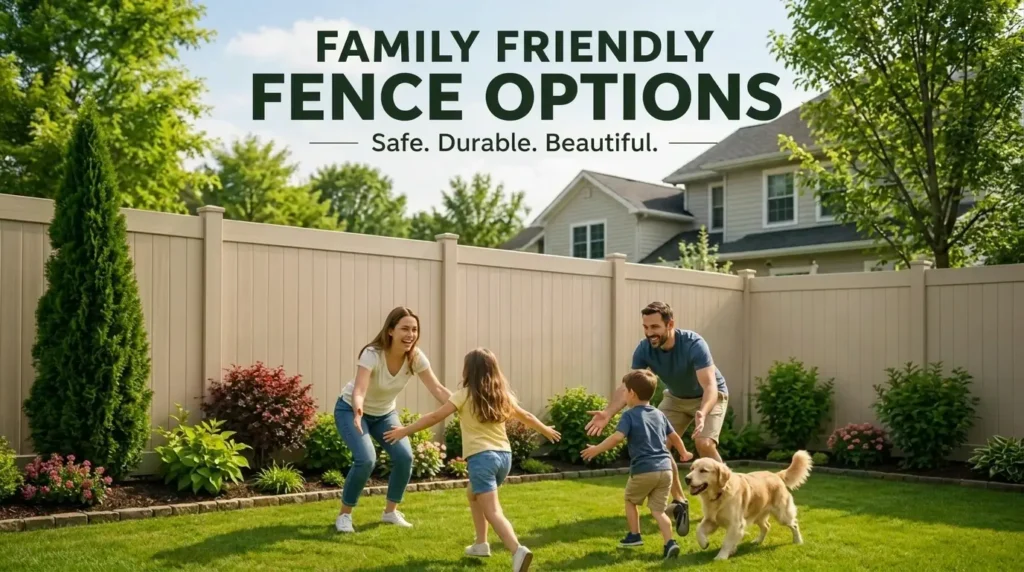
Family Friendly Fence Options in Florida | Local Fence Experts
Keep kids and pets safe with Florida Cracker Services LLC. Explore durable, family friendly fence options built for Florida yards. Get a custom quote!
For families in Florida, a backyard fence is about a lot more than marking property lines. It’s letting the kids play outside unsupervised for a few minutes, what keeps the dog from wandering into the street, and a little privacy to actually enjoy your outdoor space without an audience.
In this guide, we’ll cover what actually makes a fence family-friendly, which materials work best for kids and pets, key safety features to look for, height and privacy considerations, and how to choose the right option for your specific backyard.
What Makes a Fence Family-Friendly?
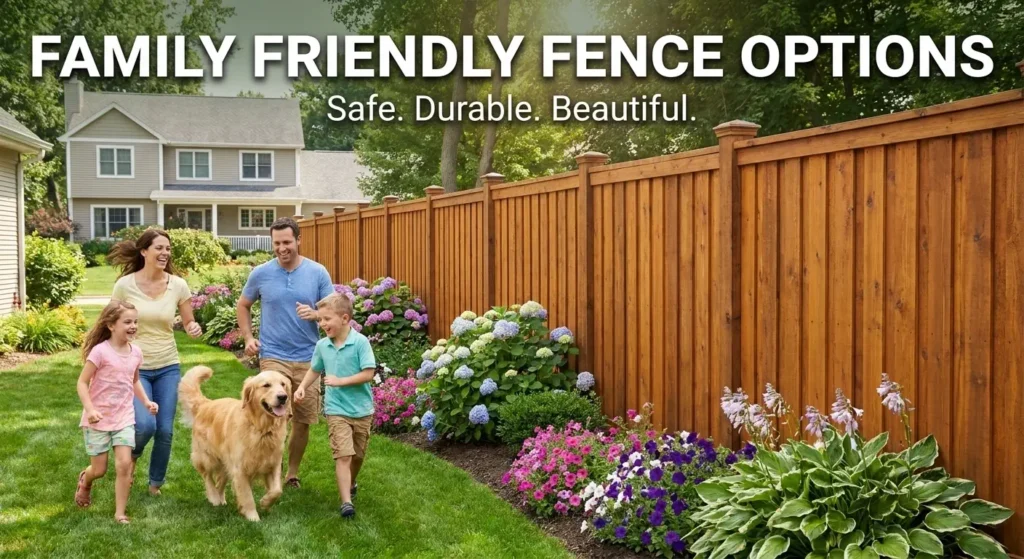
It depends on your kids’ ages, your pets, and how you use your backyard. But family-friendly fences generally share a few key traits:
- Child safety: A truly child-safe fence has no gaps large enough for a small child to squeeze through, no horizontal rails or footholds that make climbing easy, and smooth surfaces free of splinters, sharp edges, or exposed nails.
- Pet safety and containment: For pet owners, the fence needs appropriately sized gaps (or none at all), enough height to prevent jumping, and a design that discourages digging underneath.
- Backyard security and enclosed play areas: A well-built fence creates a contained space where kids and pets can play freely, without constant worry about them wandering off or strangers wandering in.
- Privacy for outdoor family time: Privacy fencing lets your family enjoy outdoor space without feeling like you’re on display for the neighbors.
The best family-friendly fence checks as many of these boxes as possible, while still fitting your budget and maintenance preferences.
Best Fence Materials for Families
Different materials offer different combinations of safety, durability, and upkeep. Here’s how the most common options stack up for families.
Vinyl Fencing
Vinyl is a popular choice for families, and for good reason. It has a smooth surface with no splinters or sharp edges, making it a safe option for kids and pets.
It’s also low-maintenance, with no staining or sealing required, and holds up well against Florida’s humidity.
Wood Fencing
Wood offers a classic look and a lot of flexibility in height and privacy level. It can absolutely be family-friendly, but it requires more attention: regular sanding of rough spots, sealing to prevent splinters, and monitoring for loose boards or exposed nails that could pose a safety risk.
Is vinyl or wood better for families?
Vinyl generally wins out for families prioritizing low maintenance and consistent smoothness, especially with young kids.
Wood can be just as safe, but it takes more ongoing care to keep it that way — particularly in Florida’s climate, where humidity speeds up wear.
Aluminum Fencing
Aluminum is durable, low-maintenance, and often used to meet pool safety requirements thanks to its strength and the ability to install it with minimal gaps. It’s a strong option for families who want security without sacrificing an open, airy look.
Composite Fencing
Composite fencing combines the classic wood look with far less maintenance, resisting rot, warping, and splintering better than traditional wood — a solid middle-ground option for families who want aesthetics and durability.
Which fence lasts longest in Florida?
Among family-friendly options, vinyl and aluminum tend to last the longest in Florida’s climate, often outperforming wood in both lifespan and resistance to humidity-related damage.
Fence Safety Features to Look For
Beyond just choosing the right material, certain design features make a real difference in how safe a fence actually is for kids.
Climb-resistant design
Horizontal rails on the outside of a fence essentially create a ladder for curious kids. Look for designs with rails on the inside only, or fully flat-paneled options like vinyl, which offer nothing for little hands and feet to grip.
Smooth, splinter-free surfaces
Especially important for wood fencing, as rough or weathered wood can cause cuts and splinters, particularly for kids who like to touch, lean, or climb on everything. Regular sanding and sealing keep wood surfaces safe.
Appropriate gap spacing
Gaps between pickets or panels should be narrow enough that a small child can’t fit their head or body through. This matters just as much for pet containment as it does for child safety.
Rounded post caps over sharp points
Decorative pointed post caps might look nice, but rounded or flat caps are a safer choice in yards where kids are climbing, running, or playing rough near the fence line.
No exposed hardware
Nails, screws, or brackets that stick out or work loose over time are a hidden hazard. Regular inspections (see our seasonal maintenance checklist) help catch these before they become a problem.
Put together, these features matter more than material alone — a well-designed vinyl or aluminum fence with the right spacing and no climbing points is often safer than a poorly maintained wood fence, regardless of which material is technically “better.”
Choosing the Right Fence for Pets
Pets have their own set of safety needs, and the right fence depends a lot on the size and temperament of your animals.
Gap size and dig-proofing
Small dogs and cats can slip through surprisingly small gaps, so tight picket spacing or a solid panel design works best for smaller pets.
For diggers, consider burying mesh or adding a concrete footer along the base of the fence to prevent tunneling underneath.
Height for jumpers
Larger or more athletic dog breeds may need a taller fence than you’d think — what stops one dog might be an easy jump for another. When in mind, it’s worth erring on the taller side, especially for high-energy breeds.
Durable materials for scratching and chewing
Vinyl and aluminum tend to hold up better against scratching, chewing, and general wear from pets compared to wood, which can splinter or weaken over time under repeated stress.
Visibility considerations
Some pets (particularly dogs prone to barking at passersby) do better with a solid, non-see-through fence that limits what they can see and react to on the other side.
The right pet-friendly fence often comes down to knowing your specific animal’s habits. A fence that works great for a calm senior dog might not hold up to a young, high-energy breed.
Fence Height & Privacy Considerations
Fence height depends on your primary goal:
- Child safety and general containment: 4 feet is a common minimum, though many families opt for taller
- Privacy: 6 feet is standard for blocking sight lines from neighbors
- Pool areas: Florida pool safety requirements often call for specific height and gate standards (this should be confirmed with current local code before publishing, as requirements can vary by county)
Balancing privacy with airflow
In Florida’s climate, a fully solid fence can sometimes trap heat and limit airflow in your yard. Some families opt for a semi-private design like alternating panels or lattice tops that offer privacy at eye level while still allowing some breeze through.
Ultimately, height and privacy come down to what matters most for your family: full seclusion, general safety, or a balance of both.
Safe Gate Options for Families
A fence is only as safe as its gate. Even the most secure fence design can be undermined by a gate that’s easy for kids to open on their own.
Self-closing, self-latching gates
These are especially important for pool areas, where a gate left open even briefly can be dangerous.
Self-closing hinges and self-latching mechanisms mean the gate secures itself automatically, even if someone forgets to close it manually.
Child-proof latch height
Latches placed higher up, out of easy reach for young children, add another layer of protection, especially combined with self-latching hardware.
Gate visibility
A semi-private or see-through gate design can actually be a safety advantage, letting parents keep an eye on what’s happening in the yard even when the gate itself is closed.
Regular hardware checks
Hinges and latches loosen over time, especially in Florida’s humidity. Periodic checks ensure a “safe” gate stays that way.
Does a Family-Friendly Fence Add Property Value?
A well-built, safe, and attractive fence is a meaningful selling point for many buyers, particularly families house-hunting with kids or pets of their own.
Buyer appeal
An enclosed, secure backyard signals move-in-ready peace of mind to buyers, saving them the cost and hassle of installing a fence themselves.
Material and quality matter
Higher-quality fence materials like vinyl, aluminum, or well-maintained wood tend to hold their value better than lower-cost options that show wear quickly. A fence that looks worn or damaged can actually hurt curb appeal rather than help it.
Pool and safety compliance
For homes with pools, a fence that meets current safety requirements isn’t just a value-add; it can be a deciding factor for buyers with young children.
In short, investing in a quality, family-friendly fence isn’t just about safety today; it can pay off at resale too.
How to Choose the Right Fence for Your Backyard
With so many options, it helps to narrow things down with a few key questions:
- What’s your main priority? Child safety, pet containment, privacy, or a mix of all three?
- What’s your yard layout? Pool areas, sloped yards, or specific code requirements may affect material and height choices
- How much maintenance are you willing to take on? Low-maintenance options like vinyl or aluminum vs. more hands-on materials like wood
- What’s your budget? Material, height, and gate features all affect overall cost
- Do you need it to last long-term, or is this a shorter-term solution?
A reliable contractor like Florida Cracker Services LLC can help you answer these questions first to help narrow down the right material, height, and features — rather than getting overwhelmed by every option available.
FAQs – Family Friendly Fence Options
What is the best family-friendly fence?
It depends on your family’s needs, but vinyl and aluminum are popular for combining safety, low maintenance, and durability.
Which fence is safest for children?
Fences with no climbable horizontal rails, smooth surfaces, tight gap spacing, and rounded post caps.
What fence works best for pets?
Solid or tightly spaced fencing with dig-proofing at the base and adequate height for your pet’s size and energy level.
Is vinyl or wood better for families?
Vinyl generally requires less maintenance and offers a consistently smooth, safe surface; wood can be just as safe but needs more upkeep.
How tall should a family fence be?
4 feet minimum for general safety, 6 feet for privacy, with pool areas often requiring specific height standards.
Which fence offers the most privacy?
Solid vinyl or tightly spaced wood fencing offers the most complete privacy.
What is the safest gate option for children?
Self-closing, self-latching gates with child-proof latch height, especially near pools.
Which fence lasts longest in Florida?
Vinyl and aluminum typically outlast wood in Florida’s humid climate.
Can a family-friendly fence increase property value?
Yes, a safe, well-maintained fence adds buyer appeal and can be a deciding factor for families.
How do I choose the right fence for my backyard?
Start with your top priority (safety, privacy, pets), then factor in yard layout, maintenance tolerance, and budget.
Conclusion
Choosing a family-friendly fence isn’t just about picking a material; it’s about creating a backyard where kids can play safely, pets stay contained, and your family can enjoy some privacy, all while standing up to Florida’s demanding climate.
Give your family a backyard they can enjoy safely. Contact Florida Cracker Services LLC to find the right family-friendly fence for your home.